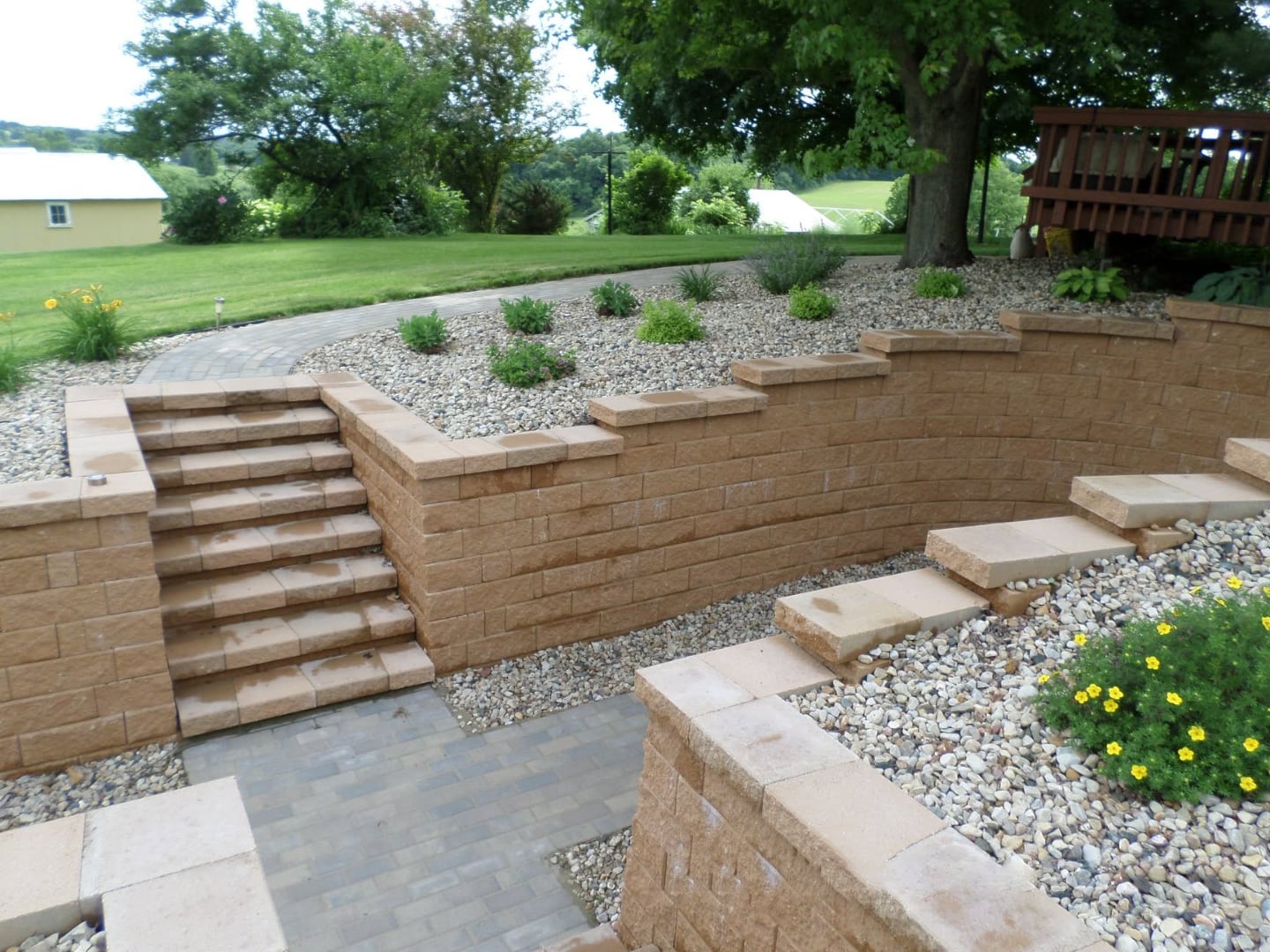
Retaining Walls That Solve the Problem and Look the Part
Four Seasons Landscaping engineers and installs segmental retaining walls and garden walls in Platteville, WI and southwest Wisconsin — solving erosion and slope problems while adding lasting curb appeal.
Retaining Walls Built for Wisconsin's Soil and Climate
Retaining walls are structural systems, not just decorative features. A wall that fails — because it was undersized, improperly battered, or built without adequate drainage — is expensive to fix and can damage your property in the process. Four Seasons designs and installs retaining walls that are engineered to hold.
We work with the clay-heavy soils common across Grant County and the Driftless region, accounting for hydrostatic pressure, freeze-thaw expansion, and drainage requirements in every wall we build. For walls under 4 feet, standard segmental block with proper backfill and drainage aggregate typically suffices. Taller walls may require geogrid reinforcement layers and, in some municipalities, an engineer's stamp.
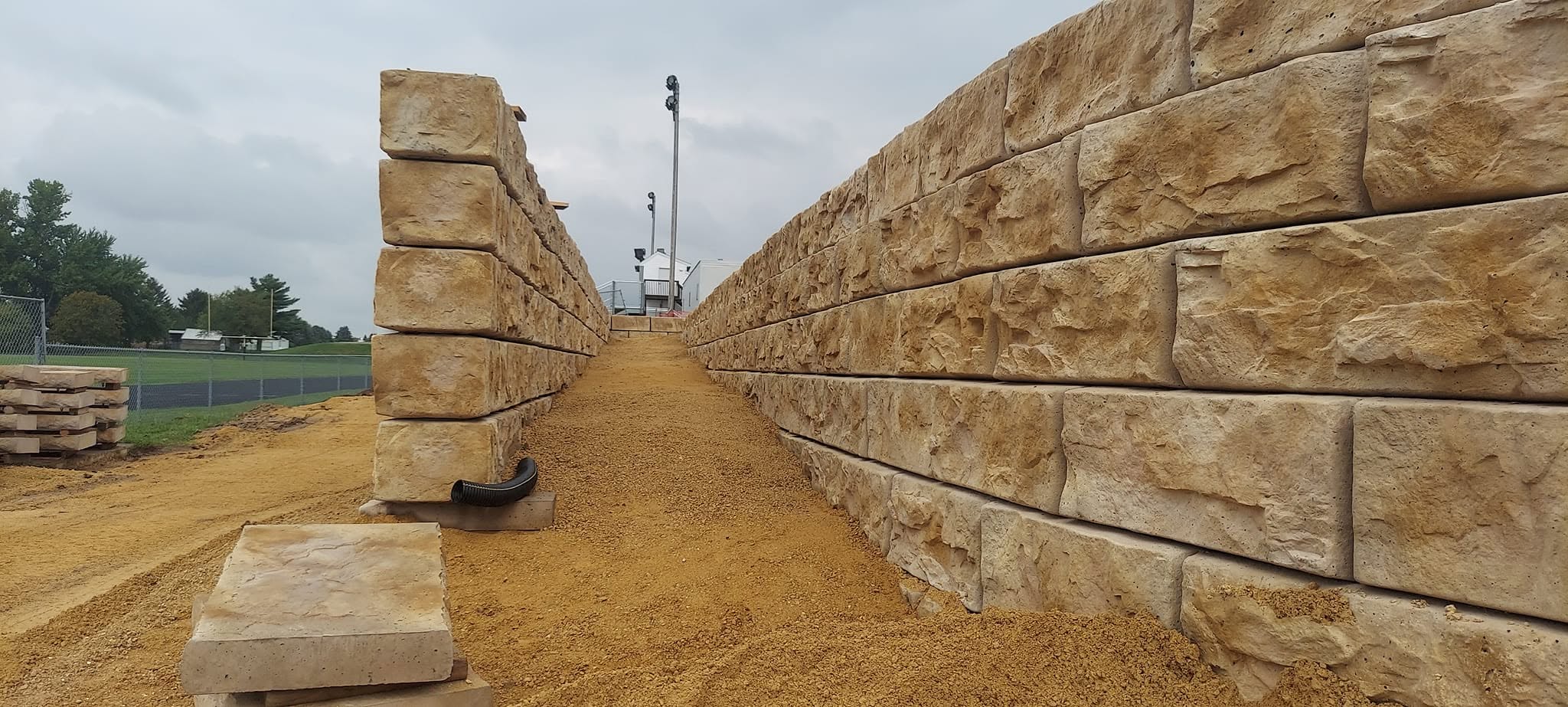
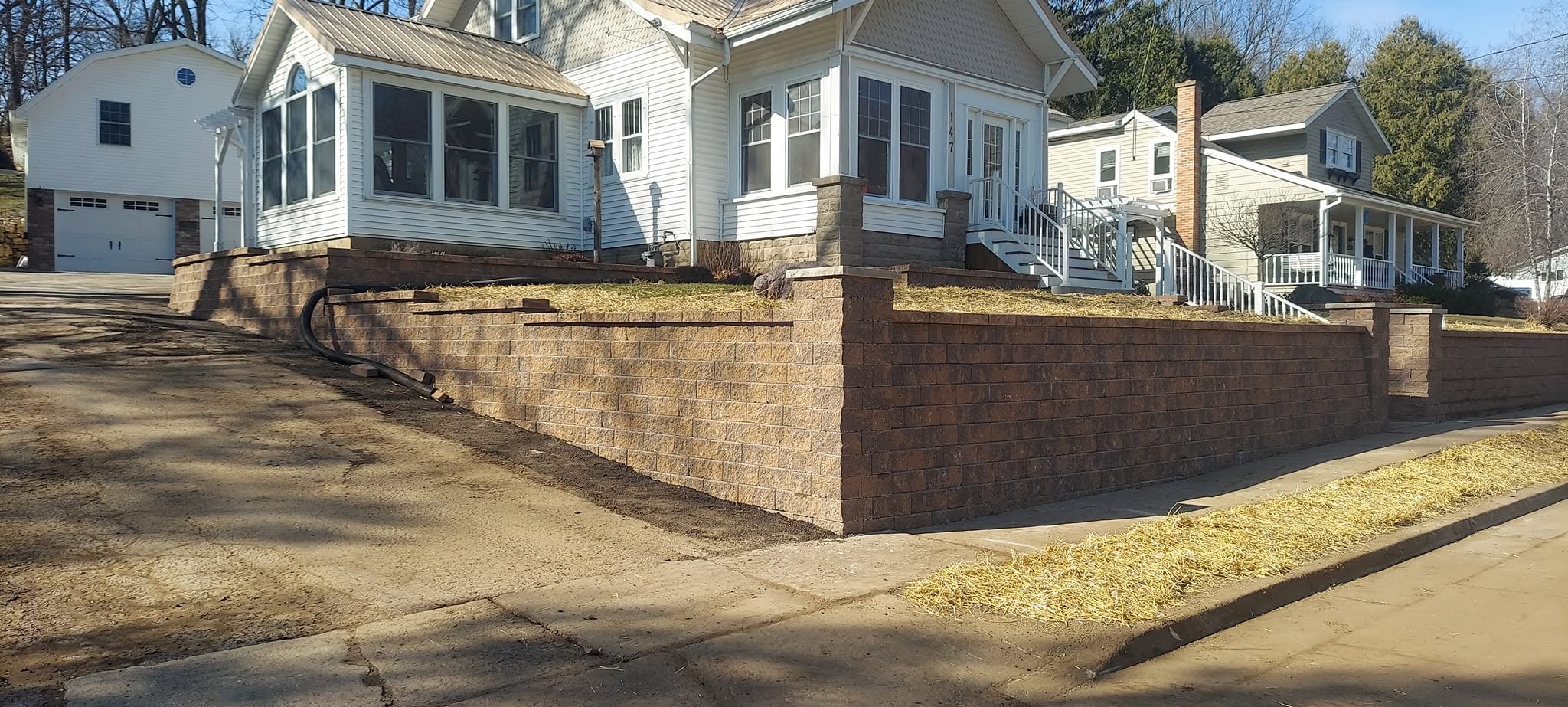
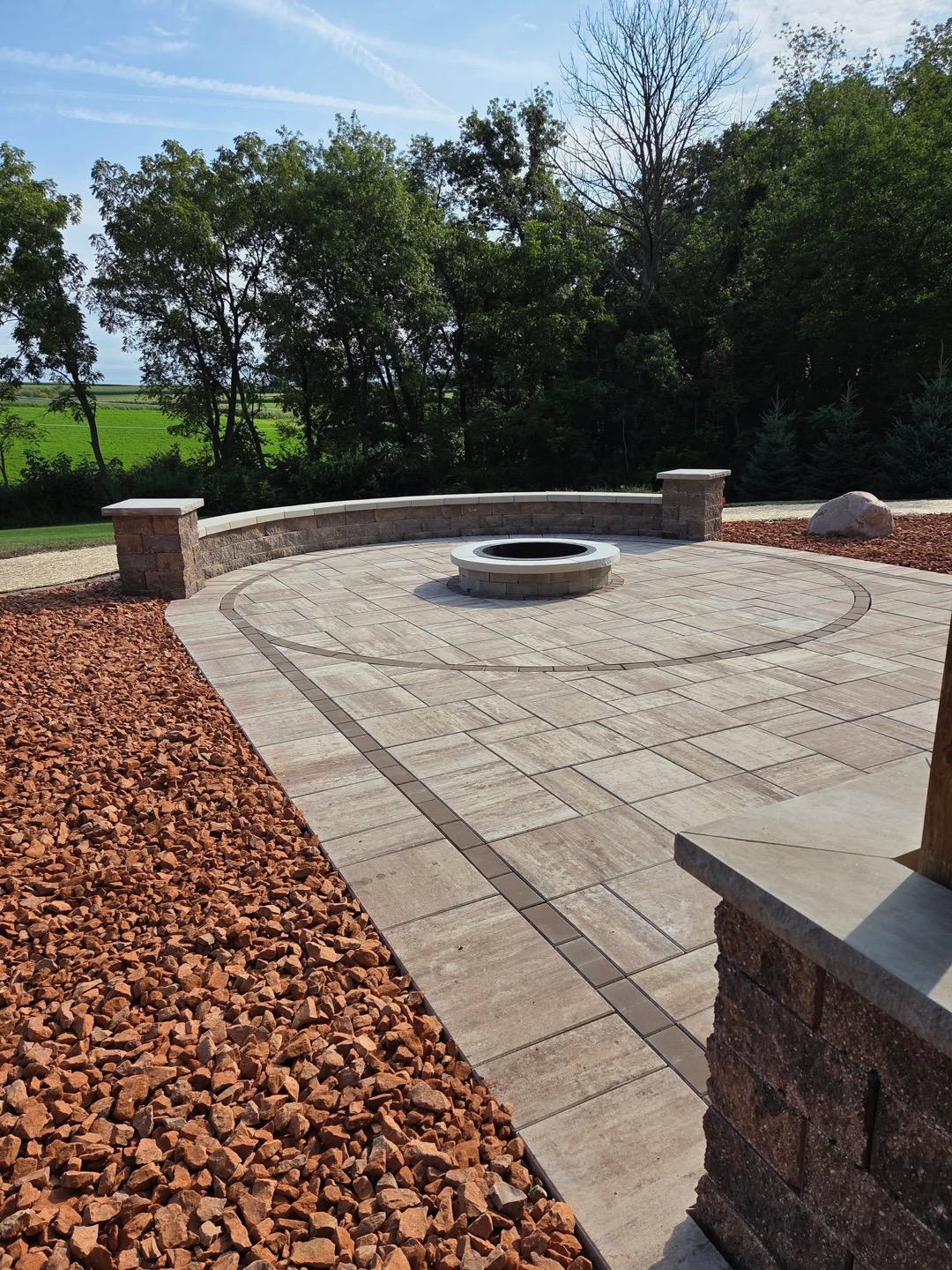
We install segmental retaining wall products from the CMC catalog — purpose-built for structural performance and available in styles that complement any landscape from traditional to contemporary. Garden walls, edging walls, and decorative walls are also part of our hardscape portfolio.
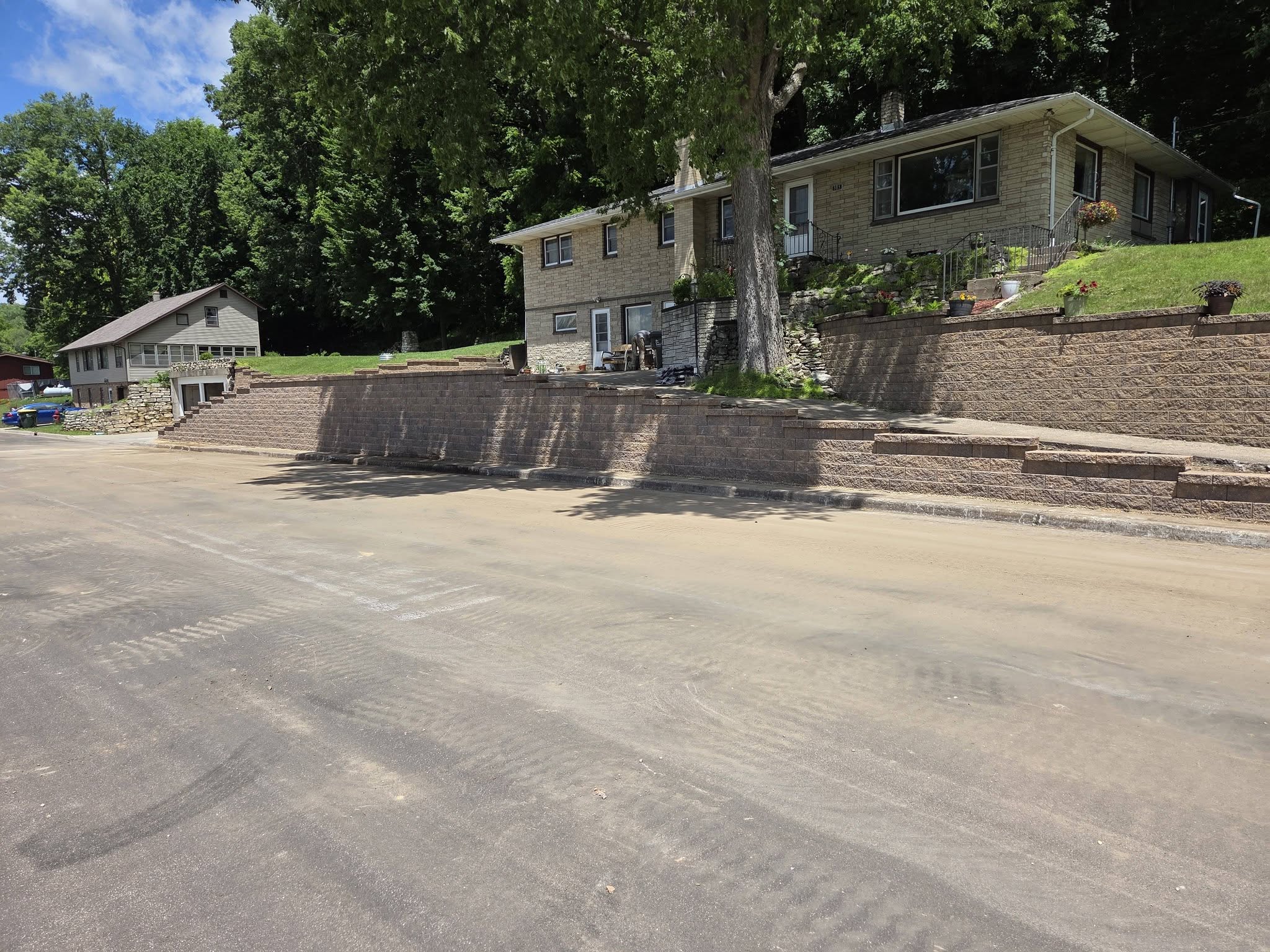
What's Included
- Site evaluation and wall layout design
- Proper excavation to structural footing depth
- Compacted gravel base and drainage aggregate backfill
- Segmental block installation with correct batter (backward lean) per manufacturer specs
- Geogrid reinforcement on walls requiring additional structural support
- Perforated drain pipe at the base for positive water management
- Cap block installation for a clean finished top
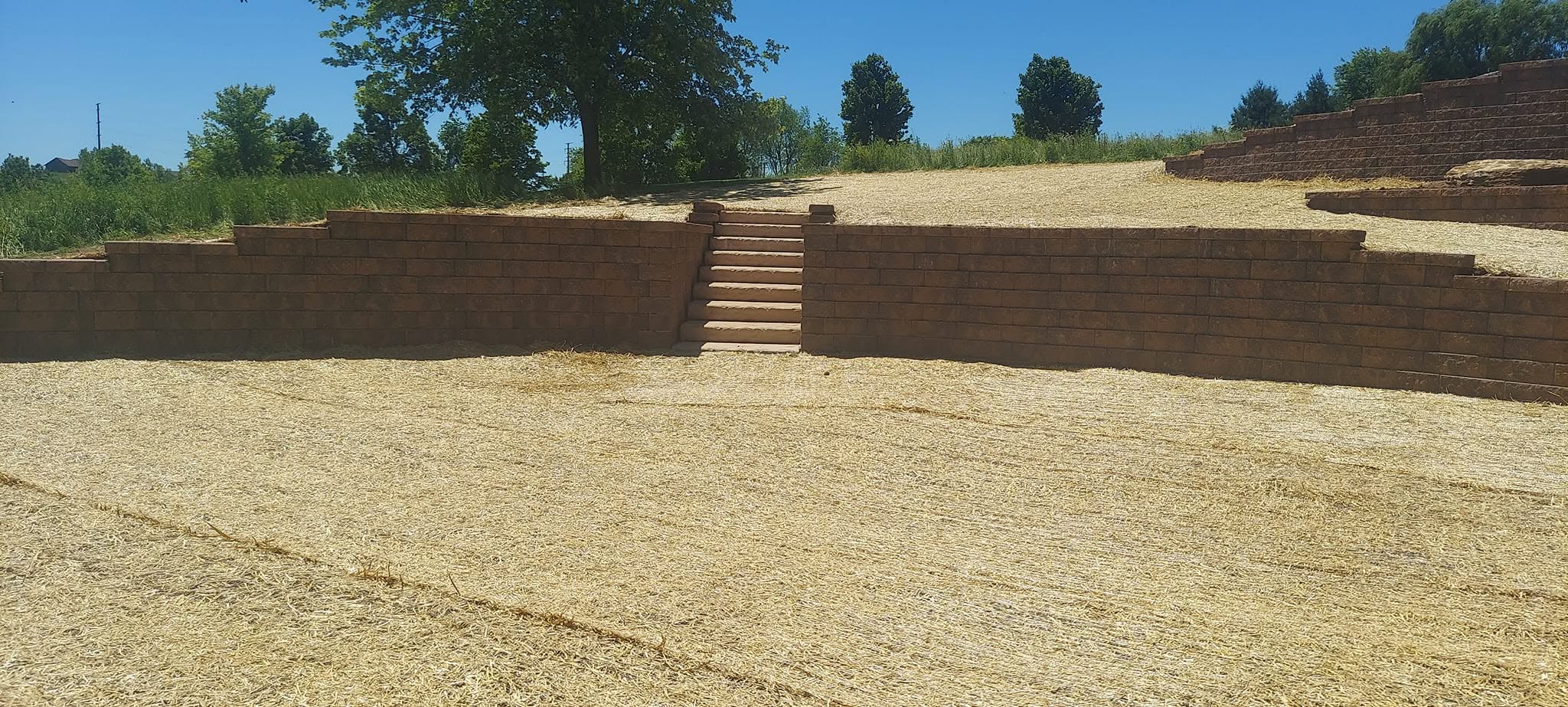
- Integrated steps built into the wall system as needed
Our Process
Site Assessment
We evaluate the slope, soil type, drainage patterns, and any existing structures to determine the right wall type and design approach.
Design & Estimate
We design the wall layout, specify materials, and provide a detailed estimate. For larger walls, we recommend an engineering review before proceeding.
Installation
Excavation to footing depth, compacted base, drainage aggregate, block installation, geogrid layers where required, and cap block finishing.
Final Grading
We backfill, grade the area behind and below the wall, seed or sod disturbed areas, and clean up the site before final walkthrough.
FAQ — Retaining Walls & Garden Walls
In most Wisconsin municipalities, retaining walls over 4 feet in height (measured from the base of the footing) require a building permit and, often, an engineer's design. Walls under 4 feet typically do not require permits, though setback requirements from property lines and structures still apply. We'll advise on local requirements during the consultation and can assist with the permit process.
A properly installed segmental retaining wall should last 40–60 years or more. The blocks themselves are extremely durable — concrete masonry products designed for structural use. Longevity depends primarily on proper installation: adequate base, correct batter, and good drainage behind the wall. Poor drainage is the leading cause of retaining wall failure, which is why we install perforated drain pipe at the base of every structural wall.
Yes — a well-designed retaining wall can redirect water, create level terraces that collect and infiltrate runoff, and eliminate erosion on slopes. The wall itself must be drained (water cannot build up behind it), but the terraced areas it creates can significantly improve how water moves through your yard. In some cases, we combine retaining walls with French drains or surface swales to manage water holistically.
A retaining wall is a structural system holding back a significant mass of soil — it must be engineered to resist lateral earth pressure. A garden wall (or landscape wall) is primarily decorative — it might define a planting bed, create a low border, or add visual structure without holding back significant amounts of soil. We build both, and we design each appropriately for its structural load.
A properly installed wall with correct batter (backward lean into the slope) and drainage should remain stable indefinitely. Most wall movement is caused by water pressure behind the wall, frost heave from inadequate base depth, or insufficient geogrid for the wall height. Our installations follow manufacturer specifications for base depth, batter, and geogrid placement at every height increment.
Related Services
Schedule Your Free Consultation
We'll come to your property, talk through your goals, and put together a detailed design and estimate — no charge, no obligation. Serving Platteville and all of southwest Wisconsin.