
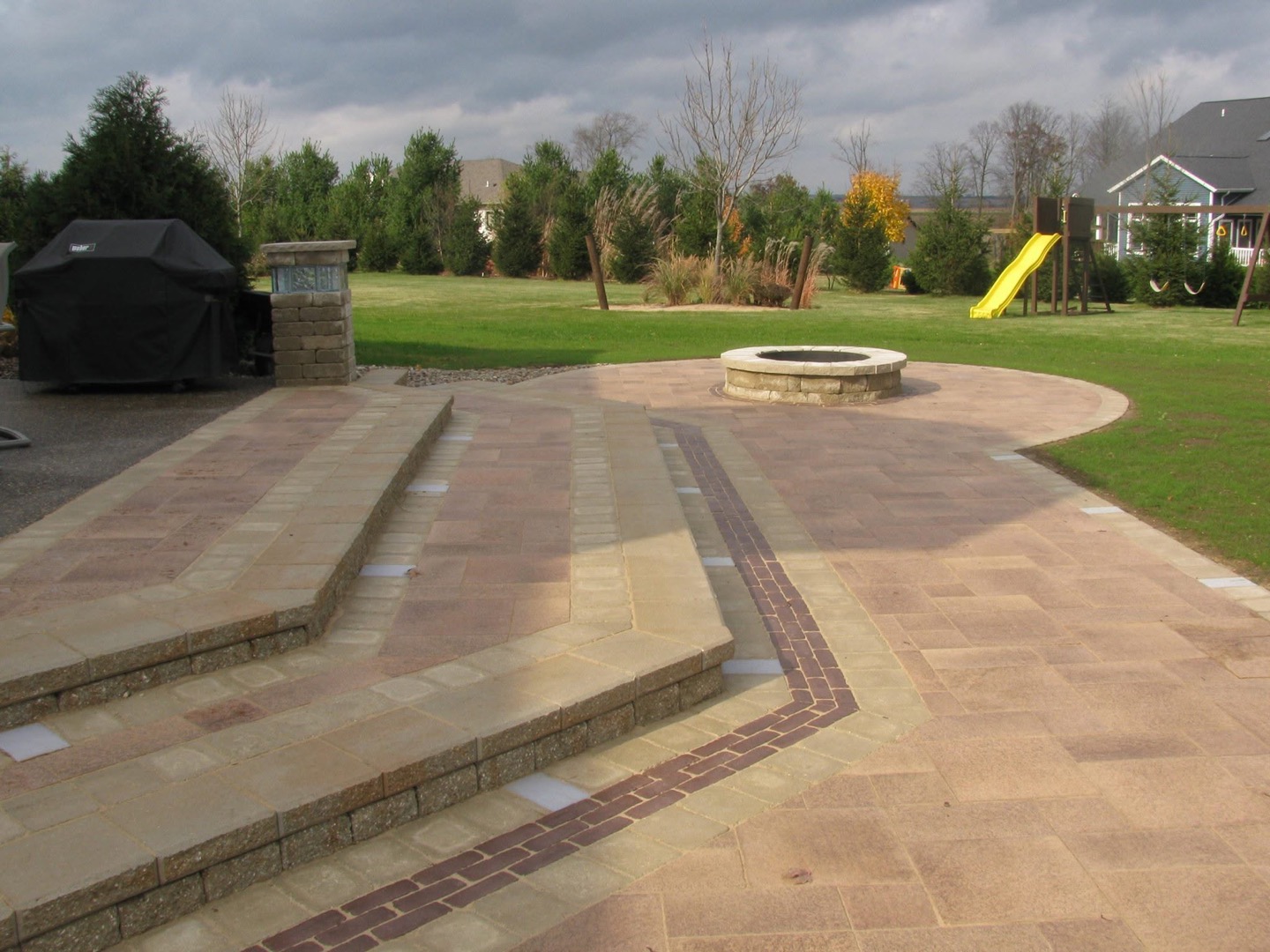
We get this question constantly: should I do pavers or stamped concrete? The honest answer is that both can work — but Wisconsin's climate creates meaningful differences in long-term performance that affect which one makes sense for most homeowners. Here's what we tell our clients.
The Core Difference: Monolithic vs. Modular
Stamped concrete is a single monolithic slab. When it moves — from frost heave, ground settling, or thermal expansion — it cracks. And in Wisconsin, it moves. Cracking is not a question of whether, it's a question of when and how badly.
Concrete pavers are individual modular units set in sand over a compacted aggregate base. When the ground moves, individual pavers can shift slightly and be reset. The "seams" between pavers allow for controlled movement without structural failure.
This distinction matters enormously in Zone 5a, where the ground freezes and thaws multiple times each winter with significant force.
Category-by-Category Comparison
Durability
Pavers: Individual units rated for freeze-thaw cycles. When properly installed (deep compacted base, correct sand setting bed), a paver patio typically lasts 25–30+ years with minimal intervention. Individual units can be replaced if damaged.
Stamped Concrete: Stamped concrete in Wisconsin typically develops visible cracking within 5–10 years, sometimes sooner. Crack control joints help manage where cracking occurs, but they're part of the design from the start — concrete will crack, the question is whether the cracking is controlled or random. Sealer can slow deterioration but doesn't eliminate it.
Maintenance
Pavers: Occasional re-sanding of joints (every 3–5 years for some installations), re-leveling of any units that shift, and periodic sealing if desired (not required). Weeds in joints can occur if polymeric sand is not used or maintained. Low overall maintenance burden.
Stamped Concrete: Sealing is essential — typically every 2–3 years to protect the stamped surface and color from UV and moisture damage. Without sealing, stamped concrete fades and deteriorates rapidly. Cracks need to be addressed before they grow and admit water. Higher ongoing maintenance requirement than pavers.
Repair
Pavers: A damaged paver can be removed and replaced with a matching unit. Grade changes can be corrected by relaying sections. Repairs are generally clean and nearly invisible when done correctly.
Stamped Concrete: Crack repair is visible. Color matching a repaired section to the existing concrete is extremely difficult — patches tend to look like patches, especially as the original surface ages and fades. A large crack effectively means living with it or replacing the entire slab.
Upfront Cost
Pavers: Higher upfront installation cost — typically $12–$30/sq ft installed for concrete pavers vs. $8–$18/sq ft for stamped concrete in our area.
Stamped Concrete: Lower initial cost. However, when you factor in sealing costs, crack repair, and eventual replacement (often 15–20 years earlier than pavers), the total cost of ownership often closes the gap significantly.
Aesthetics
Pavers: Wide variety of patterns, colors, and products. The modular nature allows for borders, inlays, and pattern changes that stamped concrete can't achieve. Aesthetics hold up over decades without the color fade common in stamped concrete.
Stamped Concrete: Can achieve a seamless, monolithic look that some homeowners prefer. Pattern and color options are extensive. However, fading and UV damage affect appearance over time even with regular sealing.
Our Recommendation for Wisconsin Homeowners
For most Wisconsin homeowners who are planning to stay in their home long-term and want a patio that holds up without significant maintenance overhead, we recommend concrete pavers. The upfront cost premium pays for itself in reduced maintenance and a much longer useful life before replacement is necessary.
Stamped concrete can make sense for covered applications (covered porches, enclosed patios) where it's protected from direct freeze-thaw exposure, or for homeowners with a shorter time horizon who want the lower upfront cost.
We install both — and we'll be honest with you during the consultation about which one makes sense for your specific situation, site, and goals.