
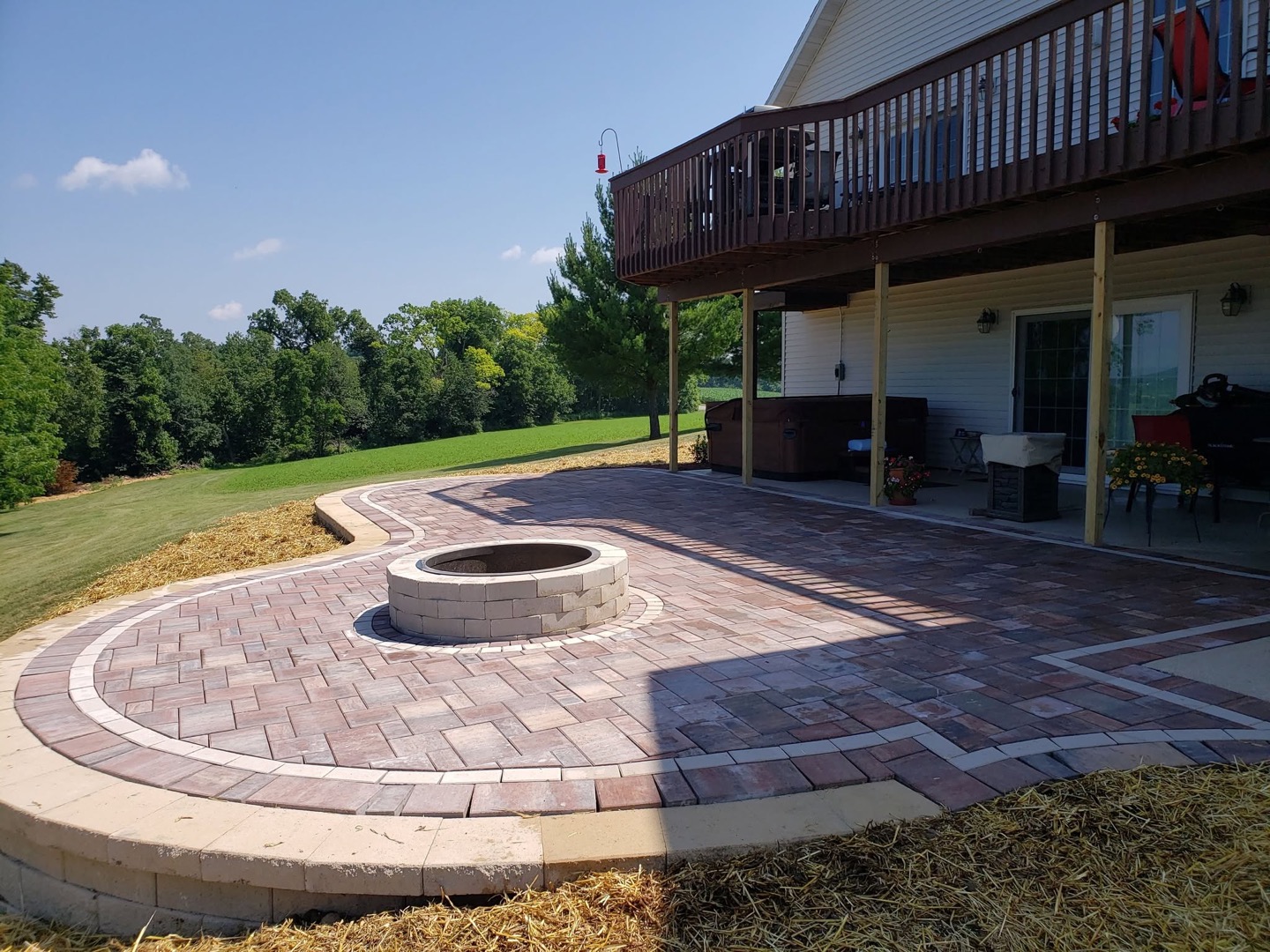
Southwest Wisconsin gives us a compressed outdoor season — roughly April through October for comfortable outdoor work, with the shoulder months (March and November) for preparation and closedown. Here's what to do when, based on our experience maintaining properties throughout Grant, Iowa, and Lafayette counties.
Late Winter (February – March)
Planning Season
The best time to plan a hardscape project is before the ground thaws. Contractors fill their calendars quickly once project season begins — if you want a patio installed in June, reach out in February or March. By May, the popular summer installation slots are often already committed.
Late winter is also when we assess winter damage: salt damage on planting beds along driveways and walks, heaving in hardscape (pavers that froze and shifted), and winter desiccation damage on evergreens.
Tasks
- Plan new projects and schedule consultations
- Order seed and soil amendments (bare spots from winter traffic)
- Inspect hardscape for heaving — minor paver movement can often be reset before spring
- Check irrigation system plans if relevant to spring startup
Early Spring (April)
Cleanup and Assessment
April is typically cold and wet in Grant County. Wait until the soil has dried out before walking heavily on lawn areas — wet clay soil compacts under foot traffic and wheel loads. The "squeeze test" is useful: grab a handful of soil; if it forms a ball that doesn't crumble, it's too wet to work.
Tasks
- Spring cleanup: remove winter debris, cut back ornamental grasses and perennials
- First lawn assessment: identify bare patches, note winter kill in planting beds
- Apply pre-emergent crabgrass control (timing: forsythia bloom = soil temperature is right)
- Prune dead wood from trees and shrubs before leaf-out makes identification harder
- Begin hardscape projects — the ground is soft but workable
Late Spring (May)
Planting and Project Season Opens
After Mother's Day is traditionally the safe frost-free date for tender annuals in southwest Wisconsin, though late frosts are possible through mid-May. Wait until after Memorial Day for warm-season plantings if you want to be safe.
May is also when the hardscape project backlog is at its most intense — warm weekends with long days mean the crews are running full schedules. Book early.
Tasks
- Plant trees, shrubs, and perennials — spring is ideal (before summer heat stress)
- Seed or sod bare lawn areas
- First lawn application if fertilizing (Memorial Day is a reasonable target)
- Mulch planting beds — 2–3 inches to conserve moisture through summer
- Hardscape projects in full swing
Summer (June – August)
Maintenance Season
Wisconsin summers in the Driftless region run warm and often dry through July and August. Clay soils can crack in drought; newly planted material needs watering until established (typically 1 full season for shrubs, 2–3 years for trees).
Tasks
- Water new plantings — 1 inch per week, deep infrequent watering preferred to daily shallow
- Deadhead perennials to extend bloom
- Keep mowing height at 3–3.5 inches in summer — higher turf shades roots and retains moisture
- Watch for Japanese beetle damage (peak late June through July in our region)
- Hardscape projects continue through August
Fall (September – October)
The Best Season for Landscape Work
Fall is actually the best time of year to do many landscape tasks in Wisconsin — the soil is warm, evaporation is lower, and fall-planted trees and shrubs have the entire winter to establish roots before summer heat. Fall overseeding of lawn areas has better success rates than spring in our climate.
Tasks
- Fall overseeding and aeration — the single best lawn investment in our climate
- Plant trees and shrubs through mid-October
- Fall fertilizer application for turf (late October, "winterizer")
- Plant spring bulbs (tulips, daffodils, allium) before ground freezes
- Final mowing — cut down to 2.5 inches for the last cut of the year to reduce vole habitat
- Sign snow removal contracts (early October deadline to guarantee capacity)
Late Fall and Winter (November – January)
Closedown and Snow Season
Once the ground freezes, most landscape work is done. November tasks focus on winter protection — mulching tender perennials, removing annuals, and making sure drainage is working before freeze-up traps any surface water.
Tasks
- Mulch perennial beds for winter protection
- Wrap young or sensitive evergreens against desiccation and deer browse
- Snow stakes on driveway edges (helps snow removal crews avoid buried borders)
- Confirm snow removal contracts and service schedule
- Plan next year's projects during the off-season